
How to Choose Between Repairing or Replacing Your Furnace
The Factors to Consider to Help Save You Money
 Professional heating repairs can go a long way toward extending the lifespan of your furnace. But even well-maintained heating equipment will eventually need to be replaced.
As equipment ages, efficiency can decline and repair needs may become more frequent. At some point, continuing to invest in repairs may no longer make financial sense.
So how do you decide whether to repair or replace your home heating system? Here are a few important factors to consider.
Age Matters
Older furnaces, even those that have been carefully maintained, may be less efficient than newer equipment because heating technology has improved over time.
An older furnace may have a lower Annual Fuel Utilization Efficiency, or AFUE, rating than a newer model. AFUE measures how much of the fuel a furnace uses is converted into usable heat over the course of a year.
If your furnace is more than 15 years old, it may be worth evaluating whether replacement makes more sense than continuing to repair it.
If you aren’t sure how old your furnace is, look for the identification plate that lists the model and serial numbers. Share that information with our team, and we may be able to help determine the equipment’s approximate manufacture date.
Compare Costs
A new furnace is a significant investment, so it makes sense to compare replacement costs with the expense of keeping your current equipment running.
Repairs can become costly, especially when major components need to be replaced. If repair bills are becoming more frequent or a single repair represents a large percentage of the cost of a new system, replacement may be the better long-term option.
You should also consider the furnace’s age, efficiency, repair history, and expected remaining lifespan rather than relying on repair cost alone.
To help protect your heating equipment, consider a service plan. Like preventive care for your furnace, a service plan can include routine maintenance and may help cover certain parts and labor costs when covered breakdowns occur.
In some cases, safety concerns may also influence the decision. For example, a damaged or cracked heat exchanger in a combustion furnace can create the potential for combustion gases, including carbon monoxide, to enter the home. If a technician identifies a serious heat exchanger problem, the furnace should not be operated until the issue has been professionally evaluated and the appropriate repair or replacement is completed.
Talk to a Pro
If you think replacing your furnace may be the best move, talk to the experts at Scarpelli.
Many homeowners assume they can simply replace an old furnace with another unit of the same size, but that isn’t always the best approach. Improvements such as new insulation, upgraded windows, or air sealing may have changed your home’s heating requirements over time.
A professional heating assessment can help determine the appropriate equipment size and capacity for your home rather than relying on the specifications of the old system.
We can help assess your needs, evaluate your home’s heating requirements, and recommend a furnace designed to provide reliable comfort through Long Island winters.
There will eventually come a time when replacing your home heating system makes more sense than repairing it. If you need help determining whether you’ve reached that point, give Scarpelli a call today.
Benefits of Professional Heating Service Before Winter
Beat the Rush and Be Ready for That First Cold Night
 It may be the dog days of summer, but even as you enjoy the last lingering days of summer, the pace is picking up: back to school lists, more meetings at work. Getting your heating system tune-up should be at the top of your to-do list. There’s no reason to wait until temperatures fall to have us perform seasonal maintenance. The benefits of a tune-up won’t wear off in the meantime, and if you schedule your tune-up now, you’ll get your choice of appointments and be ready to go in the fall.
Even if your equipment is fairly new, regular maintenance is important. Here are all the benefits you should know about.
What’s in a Tune-up?
When you get your seasonal maintenance from the pros at Scarpelli Mechanical, your furnace or boiler will be cleaned, inspected, tested, and primed to run at peak efficiency through the fall and winter months. Our multipoint tune-up and inspection includes:
- Clean and adjust burners and inspect heat exchangers
- Test thermostat operation
- Lubricate all motors, bearings, fans and circulator pumps
- Cleaning pilot assembly
- Check and clean flame rod
- Inspect flue pipe and gas valve
- And more
5 Benefits of Regular Maintenance
Tune-ups deliver more than clean filters. Not only will your system be in prime shape and ready to go at the first unexpected cold snap in the fall, but your tune-up can also help you save money—and save energy.
- Your equipment will run when you need it most. It’s not the average winter temps that strain your equipment. It’s the stretch of single-digit days and polar vortexes that force your heating system to work extra hard to heat your home. Routine maintenance catches heating system problems in their early stages, helping you avoid inconvenient equipment breakdowns and the potentially costly repairs that come with them.
- A well-maintained heating system runs more efficiently, burning less fuel to keep you comfortable. That translates into savings on your fuel bills – often as much as 10 percent.
- Your equipment will last longer. Regular maintenance can add years to the life of your furnace or boiler. Neglected heating equipment will need to be replaced earlier than expected—a big expense that can be avoided with seasonal tune-ups.
- If you have a forced-air heating system, a well-maintained furnace will help keep air moving while also controlling household humidity – two significant contributors to healthy indoor air.
- For most people, a good warranty is a key consideration with a major purchase like a heating system. Why jeopardize that coverage? Most heating equipment warranties require routine professional service as a precondition; skip your tune-up and your manufacturer could be voided, leaving you to pay out of pocket for the expense.
Planning Ahead
Speaking of out-of-pocket expenses, consider one of our service plans. Our service plans are so much more than a seasonal tune-up. They can really help you save when you do need a repair. For just a few dollars a month, our service plan provides discounts on repairs and diagnostic fees and priority emergency service. Because according to Murphy’s Law, if something can go wrong, it will—and usually at the worst time. These emergencies won’t wait until the weather clears or normal business hours resume, and neither will we.
Why wait? Contact us today to get your heating equipment tuned up and ready for fall.
How to Improve Airflow in Your Home’s Air Conditioning System
3 Steps to Better Airflow and Better Comfort
 When your home never seems to cool down, it’s easy to assume you need to lower the thermostat. But if some rooms stay warm while others feel chilly, poor airflow could be the real problem. Turning the temperature down even further usually won’t fix the issue, and it can send your electric bill soaring.
Your cooling system depends on steady airflow to keep your home comfortable and operate efficiently. When air can’t move freely through the system, your A/C has to run longer and harder to reach the desired temperature. That extra strain can increase energy costs, reduce comfort, and contribute to unnecessary wear on important components.
Fortunately, improving airflow is often easier than you might think. Many solutions are very low-cost or are even simple DIY projects you can tackle in just a few minutes. A few small changes can help your system cool more evenly, improve efficiency, and keep your home more comfortable all summer long. Here are three steps to take now.
1. Professional Maintenance
A professional tune-up of your air conditioning system is the best way to ensure that it’s operating properly. Our technicians will perform a multi-point check of internal parts, cleaning and calibrating motors, blowers, and condensers, and checking refrigerant levels.
We’ll be able to correct problems you might not notice, like a blocked drain line, which can lead to bigger, more expensive problems if left unchecked. Have a service plan with us? Your tune-up is included.
2. Follow-Up Care
Annual maintenance by a pro is essential for efficient performance, which helps keep energy costs in check. But like flossing between dentist appointments, there are easy do-it-yourself measures you can take to ensure air can flow freely and keep your rooms comfortable without driving up energy costs.
Change the filters regularly, more often if you have pets. It’s easy and can make a huge difference in how hard your cooling system needs to work. If you’re not sure how to do it, we’ll be happy to show you how when we do your tune-up.
You should also walk through your home regularly, keeping an eye out for furniture, drapery, and rugs that might be blocking vents.
Finally, switch the fan setting on your thermostat from “auto” to “on” to keep air flowing to hard-to-cool spots.
3. Consider Problem Spaces
Additions and converted spaces like attics and garage apartments may not be connected to your home’s main duct system. In addition, they may have less insulation, making it harder to maintain a comfortable temperature. Rather than the costly work of expanding your ductwork, the best solution could be installing a ductless mini-split unit, which can provide super-efficient cooling to these types of spaces and supply heat, too.
Ready for a Tune-Up?
Better airflow for your cooling system starts with a professional tune-up. But if you think your cooling equipment is working harder than it needs to, contact us about an evaluation of your ductwork. Find out why Scarpelli is Long Island’s go-to source for HVAC maintenance and installation.
Contact us for more information today.
Old vs New: How Air Conditioning Efficiency Standards Have Changed
What to Know About Efficiency Ratings Before You Go AC Shopping
 Most people don’t have to shop around for new air conditioning equipment too often—on average, it might be 15 or 20 years before you need a new system. That’s good because it’s a big investment in your home and comfort that requires a bit of research. Cost is one factor, but the most important consideration is efficiency—how well a cooling system performs and how much energy it consumes. And if you’re shopping for a new AC, you’ll find there are new efficiency standards for cooling systems. The new standards mean that you can’t just look for a system with the same rating as your old equipment. But they will help you save energy, lower operating costs, and reduce environmental impact while keeping your home cool and comfortable.
Here’s what you need to know before you go shopping for a new air conditioning system.
Goodbye, SEER, Hello SEER2
Until a few years ago, SEER (Seasonal Energy Efficiency Ratio) was the industry standard for measuring air conditioning efficiency. It calculated how much cooling a system provides over a typical cooling season compared to the amount of electricity it uses. The higher the SEER rating, the more efficient the system.
But actual systems rarely operate under ideal laboratory conditions. So beginning in 2023, manufacturers and regulators shifted to updated testing procedures and a new rating system, SEER2, that better reflects real-world operating conditions found in homes. The main idea is that provides a more realistic estimate of performance.
As a result, the same equipment will typically receive a lower SEER2 rating than its original SEER rating.
Beyond Efficiency
While efficiency ratings are important, they are only one part of choosing the right air conditioning system.
Proper sizing and professional installation are just as important. An oversized or undersized unit can waste energy and struggle to keep your home comfortable, regardless of its efficiency rating. And poor installation will result in poor performance, as well.
Regular maintenance also plays a major role. If filters are dirty, coils are clogged, or routine service is neglected, even the most efficient air conditioner will lose efficiency.
The expert cooling team at Scarpelli understands that no two homes are alike. They can help you find the right size system for your home and your budget, and help you translate the old ratings and the new ones, including related measurements like EER2 (Energy Efficiency Ratio) and, for heat pumps, HSPF2 (Heating Seasonal Performance Factor).
Time for a New AC?
If your current system is working well and is less than 10 or 15 years old, you don’t have to replace it just because efficiency standards changed. But if your system is breaking down often, a new air conditioning system with a high SEER2 rating is an investment that will pay off in lower monthly utility bills, fewer repairs, and greater comfort.
If you’re seeing a spike in energy costs—or if your home just isn’t as cool as it used to be—it might be time to find out why homeowners and businesses throughout Nassau and Suffolk Counties trust Scarpelli Mechanical to install and maintain their cooling systems.
Contact us for more information today.
Smart Use of Your Heat Pump
Improving Efficiency, Maximizing Comfort
 Here on Long Island, ocean breezes mean our temperatures can be a bit more moderate than those of our inland neighbors. It means our spring and fall temperatures can be cooler—lingering in that range between 40°F and 60°F. That can be challenging for a furnace.
When the weather is milder and temperatures fluctuate a lot, it means a furnace needs to cycle on and off more frequently, which can lead to higher energy bills even though the weather isn’t particularly cold or hot.
But those temperatures are a sweet spot for heat pump efficiency. It’s the range where the most popular units—such as ductless mini-splits—can keep indoor temperatures comfortable without consuming a lot of energy.
That’s why adding a heat pump to your home’s HVAC system can go a long way to improve energy efficiency. While there are heat pumps that can handle the coldest temperatures, for most homeowners the savvy option is to use a heat pump to maximize efficiency and comfort, rather than completely replace their current system. Here’s what you should know.
Boosting Efficiency
Heat pumps work by moving existing heat in the air from one place to another using an outdoor compressor and an indoor air handler. While it sounds counterintuitive, in the winter, the pump extracts heat from the outdoor air or ground and distributes it to your home. We install whole-home systems that can easily handle temperatures as low as -15°F.
Mini-split type heat pumps need to work much harder, and they become less efficient, when temps fall and stay well below 40°F. That’s when your furnace may do a better job of keeping your home warm.
Using your heat pump at those times when using your furnace might be overkill can lead to significant savings on your energy bills. Many heat pumps come with features such as programmable thermostats and variable-speed compressors, which further enhance their efficiency and comfort levels.
In the Zone
Using heat pumps to strategically heat and cool specific rooms is another excellent way to boost efficiency and keep energy costs in check. Because there’s no need for ductwork, these low-profile air handlers can be installed almost anywhere—on the wall, the floor, even the ceiling. All that’s needed to connect them to the condenser is a pair of slim refrigerant pipes that fit in a three-inch hole.
This makes them ideal for condos and apartments, but it also makes them a good solution for spaces that aren’t effectively heated or cooled by your central heating or cooling system. Think additions or converted spaces like attics and garages.
This zoned heating approach means you can lower the thermostat for your whole home, and then warm specific spaces with mini-split air handlers. The same idea can work in reverse in summer, since heat pumps are fantastic at cooling and reducing humidity, too. Raise the thermostat in areas people don’t use much, and spot cool rooms you’re using.
Settings for Savings
A big difference between heat pumps and other HVAC systems is that heat pumps work best when they are set to maintain a steady indoor temperature rather than constantly ramping up and down. Adjusting the thermostat up or down at night or while you’re away is a good way to save money with a traditional heating system or central AC. But with a heat pump, those large temperature changes force the system to work harder—and less efficiently—in order to recover. That said, in summer raising the thermostat by 3 to 5 degrees can reduce energy use without sacrificing comfort when you return.
During the colder months, the most efficient temperature setting for a heat pump is typically between 68°F and 70°F when you’re home and awake. In summer, the recommended efficient setting for cooling with a heat pump is around 75°F to 78°F when you’re home. Heat pumps are also great at reducing humidity, which goes a long way to making you feel comfortable even at higher temperatures.
The Bottom Line
Choosing between a heat pump and a furnace doesn’t have to be an either-or decision. Understanding the benefits of each and how they can complement each other can help you make an informed choice—and that’s where the experts at Scarpelli can help.
Our technicians are experts at installing, maintaining and repairing heating and cooling systems, including heat pump systems. We partner with leading manufacturers like Bosch and Rheem, and can answer all your questions and help you find the best solution for your home and your budget.
Contact us for more information and to become a customer today.
The Benefits of Upgrading to a New Air Conditioning System
Enjoy Improved Efficiency, Improved Air Quality, And More
 This time of year, a lot of customers tell us they want to try to eke one more season out of their old air conditioning system. But with energy costs on the rise, that kind of thinking can be shortsighted. When summer heat waves hit, your air conditioning becomes essential—especially as we’ve seen longer and more intense heat waves compounded by coastal humidity. The fact is, a new cooling system won’t only improve comfort—it can save you money every month.
Today’s air conditioning equipment runs far more efficiently than your old system–especially if you’ve had it for a decade or more. And a new, more efficient cooling system will use less energy to keep your home comfortable. That means it will help keep your bills manageable even as electricity costs go up.
Here are seven ways a new, high-efficiency air conditioning system helps cut energy costs:
1. Variable-Speed Compressors
Older AC units typically run at full blast or not at all. Most newer systems feature two-stage or variable-speed compressors that adjust output based on real-time cooling demand. As a result, your system delivers more even temperatures and uses significantly less energy to keep your home comfortable.
2. Higher SEER Ratings, Better Efficiency
Modern air conditioning systems are required to meet minimum Seasonal Energy Efficiency Ratio (SEER) standards, and many go well beyond that. The higher the SEER rating, the more efficiently the system uses electricity to cool your home. If your current unit is over 10 years old, a new AC with a higher SEER could reduce your cooling costs by as much as 30%.
3. Smarter Thermostats, Smarter Savings
Depending on how old your AC is, it’s likely not compatible with your smart thermostat, which lets you precisely control indoor temperatures—even remotely from your phone. New systems are designed to take advantage of that technology, and the features that work with your heating system. For example, smart thermostats can “learn” your habits and adjust temperatures automatically, and have features that allow scheduled cooling cycles. They can also adjust for outside temperatures, so your AC only runs when needed, cutting down on wasted energy.
4. Right Sizing Your Equipment
If you’ve made changes to your home since your cooling system was first installed, it may not be the right size for your home. Maybe you enclosed a screen porch or converted an attic space into usable living space. Those new spaces may not be part of your existing ductwork, so your cooling system is working much harder than to get cool air into those new spaces. Updating your equipment can address those issues.
5. Better Airflow and Insulation
Upgraded AC units often work hand-in-hand with improved ductwork and better sealing. That means cooled air gets where it’s supposed to go without leaking into attics or crawlspaces. Better airflow also reduces strain on your system, improving performance and reducing your energy bills.
6. Better Air Quality
One of the most important functions of your central air system is air filtration. As air circulates through your home, it passes through the system’s air filter, which is designed to trap dust, pollen, pet dander, and other airborne particles. Upgrading to a high-efficiency filter (such as a HEPA or MERV-rated filter) can make a big difference, especially if anyone in your household suffers from allergies or asthma.
Regularly replacing or cleaning your air filters is key. A clogged filter not only reduces the air quality but also makes your system work harder, leading to higher energy bills and more wear and tear on the equipment.
Central air conditioning systems also help regulate indoor humidity levels. In addition to making you feel warmer, excess humidity can lead to mold growth, musty odors, and an increase in dust mites—all of which negatively affect indoor air quality. Your AC system naturally removes moisture from the air as it cools, creating a more comfortable and healthier environment.
7. Reduced Repair and Maintenance Costs
Older systems tend to need frequent repairs—and as parts become harder to find, those costs add up. A newer unit operates more reliably and efficiently, meaning fewer breakdowns and lower overall maintenance costs. Over time, that’s more money in your pocket.
The Bottom Line:
Ready for an upgrade? A new air conditioning system is an investment that pays off in lower monthly utility bills, fewer repairs, and greater comfort. If you’re seeing a spike in energy costs—or if your home just isn’t as cool as it used to be—it might be time to find out why homeowners and businesses throughout Nassau and Suffolk Counties trust Scarpelli Mechanical to install and maintain their cooling systems.
Contact us for more information today.
Curious About the Benefits of Heat Pumps?
Discover All-in-One Efficiency and Comfort for Your Home
There’s a lot of interest in 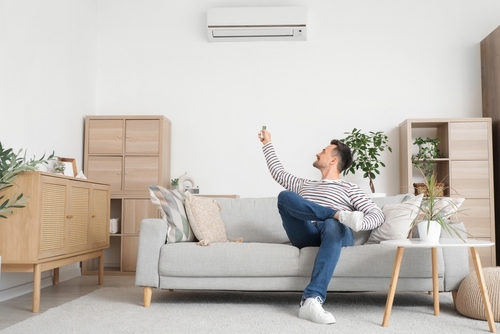 these days. That’s because they’re a great option for more efficient heating and cooling. That’s right: they provide both heating and cooling for your home. While the all-in-one aspect is great, the main benefits of a heat pump are their energy efficiency and versatility. And, they can help your reduce your home’s carbon footprint, too.
How Do Heat Pumps Work?
Heat pumps work by moving existing heat in the air from one place to another using an outdoor compressor and an indoor air handler. In the summer, hot air from inside your home is removed — creating a cooler indoor environment. While it sounds counterintuitive, in the winter, the pump extracts heat from the outdoor air (or the ground, depending on the type of heat pump system you have) and distributes it to your home.
The biggest difference is how heat pumps work with your thermostat. To maximize efficiency when you’re running a heat pump, it’s best to maintain a consistent temperature. Turning down the heat pump when you are not at home or asleep will result in increased energy use to return to your desired temperature.
Excellent Efficiency
Because this technology uses electricity to move heat rather than generate it, it’s much more energy efficient than other electric heating and cooling systems—and, installed and used correctly, it can help lower your energy bills across the board.
That said, a Long Island winter can be damp and raw, and a lot of our older housing stock isn’t as well insulated as a newer home. For some houses, a heat pump might not be the best choice as a sole source of heat. But because a heat pump system can be installed without ductwork, it make a savvy option to help you use energy more efficiently while staying more comfortable all year.
Using a heat pump in fall and spring, and when winter temperatures are milder, means you can rely less on your oil or gas furnace, helping keep those costs down. That’s because when the weather is milder and temperatures fluctuate a lot, your furnace cycles on and off more frequently, which can lead to higher energy bills. Similarly, when outdoor temperatures fall below 25⁰ or 30⁰ F, a heat pump will still provide heat, but it will need to work harder to find warm air, and it will use more electricity.
You can also use heat pumps to strategically heat and cool specific rooms, which can also contribute to lowered fuel and energy costs.
Cooling Power
In summer, a heat pump works the opposite way, pulling warm air out of your home. While the recommended efficient setting for cooling with a heat pump is around 75°F to 78°F when you’re home, you should know that heat pumps do an excellent job of dehumidifying. Humidity—especially in our coastal climate—plays a huge role in how hot and sticky you feel. Reducing humidity means that higher thermostat setting will feel just as comfortable as a lower one with a traditional AC. Adding ceiling fans can also boost comfort at higher thermostat settings, letting you save energy without noticing the difference.
Reduced Carbon Footprint
For starters, a heat pump’s efficiency makes it more environmentally friendly. But because they are electric, they produce fewer carbon emissions. And, as more and more of the electricity generated in our area comes from renewable sources—or at least cleaner-burning fuels like natural gas, rather than coal—they are better for the air we breathe and for the climate.
More Versatility
Because heat pumps and mini-split systems don’t require ductwork they are adaptable for a variety of uses. Apartments and condominium units, outbuildings like guesthouses, poolhouses, and barns, as well as additions and spaces not well-served by a primary heating system are all great candidates for a heat pump or mini-split system. Maintenance and repair is also less intensive for these systems as there is no combustion involved.
Ready to Learn More?
The expert team at Scarpelli can answer all your questions and help you find the best size and type of heat pump for your home. We have extensive training and experience in installing, servicing and repairing state-of-the-art heat pumps from top brands, like Bosch and Rheem.
If you’re interested in exploring your heat pump options, contact us today!
Boiler Installation What to Expect and How to Prepare
Get Ready for Increased Comfort and energy Savings!
 If you’ve just purchased a new boiler, you know it’s a major investment in your home, and one that will make a big improvement in your home’s comfort as well as your heating costs. If you worked with Scarpelli’s team of pros, you can rest easy knowing that the model you chose is the right size for your home and your budget. But a big purchase like a boiler is not one you make often—so you may not know what to expect for the installation process.
The good news is our team is trained to make it stress-free, with as little disruption to your life as possible. Here’s what to expect—and how you can make the process even smoother.
A Little Prep
When you work with experts, an installation job like a new boiler or furnace should be easy. However, there are a few simple steps you can take to ensure everything goes smoothly.
- Clear the work area: Remove storage items, boxes, or furniture around the area where the boiler will live. Our techs will need space to move bulky equipment safely.
- Plan for temporary heat loss: Your heating system will be off during installation. In colder weather, consider having extra blankets or space heaters ready if needed.
- Secure pets and plan access: Your fur babies may be super friendly, but their curiosity can impede our work. Techs maneuvering heavy equipment don’t want to worry about navigating around your pets, or potentially hurting them or themselves. Keep pets in a separate room and ensure installers can easily enter and exit your home.
- Ask questions ahead of time: If you’re unsure about the schedule, noise level, or expected downtime, talk to us ahead of your installation date so there are no surprises.
Installation Day
Most boiler installations take anywhere from one full day to two days, depending on the complexity of the job and whether upgrades are needed. We’ll be able to give you a specific idea based on your home.
Here’s what typically happens:
-
Out With the Old
We’ll start by shutting down and disconnecting your existing equipment, then safely remove it. We’ll need to drain any water in the boiler and detach piping or venting components.
-
Preparing the Area
We may need to make some slight adjustments to accommodate your new boiler, such as replacing piping, updating ventilation, or reinforcing mounting surfaces. We always try to make sure you know about all required work before installation, but sometimes unexpected conditions can change the scope of work.
-
Installation
We will get the new unit into position, connect it to fuel and water lines, and integrate it with your home’s heating system. We will also make electrical connections and set up thermostat controls.
-
System Testing
Our technicians complete the process by thoroughly testing and calibrating the system, checking for leaks, fine-tuning performance settings, and verifying that everything is operating safely.
-
Final Walkthrough
We’ll review how to operate your new boiler, and go over how to adjust settings and check pressure. We’ll also suggest a maintenance schedule to ensure your equipment keeps running like new.
Ready for a New Boiler?
How you heat your home has a big impact on your comfort. It can also make a big difference in what you spend each month to keep comfortable. If you think it’s time to replace your old, inefficient boiler, find out why so many of your neighbors across Suffolk and Nassau counties trust Scarpelli Mechanical. We proudly partner with leading brands like Peerless, System 2000, Weil-McClain and Bosch to bring you the best in heating technology. And our expert team is trained to help you choose the best option for your home and your budget, make sure it’s installed properly, and offer expert maintenance and repair to maintain peak performance.
Learn more about how a boiler upgrade will help you save money, keep heating costs down while staying more comfortable: Contact us today.
Get to Know Your Furnace
3 Essential Maintenance Tips to Keep You Comfortable All Winter
 Your furnace is one of the most important pieces of equipment in your home—particularly here, where coastal storms and raw temperatures can make winter feel endless. That’s why it’s smart to know the basics of how your furnace works and how to take good care of it so it runs reliably when you need it. Understanding your system can also make it easier to troubleshoot small problems before they require an expensive—or late-night—service call.
Furnace Basics
A furnace heats your home by warming air and circulating it through a network of ducts. Inside the unit, fuel is burned to heat a heat exchanger, and a blower pushes that warmed air through the ductwork and into your living spaces. As the air cools, return ducts pull it back to the furnace, where the cycle begins again.
Your thermostat acts as the control center, signaling the furnace when your home needs heat and when the desired temperature has been reached. Today’s furnaces are far more advanced than older models, featuring high-efficiency heat exchangers, microprocessor-based controls, and high-pressure flame-retention burners. These improvements boost efficiency, deliver more consistent comfort, and reduce wasted energy.
Furnaces are available in both gas-fired and oil-fired models, with minimum AFUE ratings of 80%, and many systems exceed that benchmark.
All of that technology can translate into real savings on your heating bills—but only if your system is properly cared for. Regular, professional maintenance is the best way to protect your investment, keep your furnace running efficiently, and ensure reliable comfort all winter long.
How to Care for Your Furnace
There are three easy steps you can take to maximize comfort while reducing repair hassles with your furnace.
-
Regular maintenance: An annual tune-up is the key to keeping your furnace running properly. In addition to helping prevent breakdowns, professional maintenance ensures your system operates at peak efficiency. That means fuel is burned more efficiently, helping keep heating costs down. Routine service also extends the life of your equipment—an investment you don’t want to replace too soon.
Annual tune-ups also help protect your warranty. Most heating equipment warranties require routine professional service as a condition of coverage. Skipping maintenance could leave you responsible for repair costs that would otherwise be covered.
- Change your filter: Cleaning or replacing your furnace filter is an easy DIY task that helps prevent many common system problems. Set a reminder to check your filter at least once a month during the winter to maintain proper airflow and efficiency.
- Use your thermostat properly: When used correctly, a smart thermostat helps your heating equipment operate more efficiently. Avoid large temperature swings, which can force furnaces and boilers to work harder than necessary and increase wear on the system.
How Can We Help?
The expert team at Scarpelli Mechanical is here for you. Whether you want a technician to talk you through changing or cleaning your filters, need to schedule a tune-up, or are considering new equipment installation or service, we’re ready to help.
For more than 25 years, Scarpelli Mechanical has been Long Island’s trusted source for high-efficiency heating and cooling systems for homes and businesses.
Contact us for more information today.
Welcome to the New Scarpelli Mechanical Website!
We make it easy to get the HVAC service you deserve

At Scarpelli Mechanical, our goal is to provide the best HVAC service to Long Island homes and businesses. That’s why we’ve redesigned our website to make managing your heating and cooling needs faster and easier.
With more than 25 years of experience in serving Long Island, we know how important reliable service and clear information are. Our new site combines our expertise with modern convenience to improve your experience. Every element, from design to content, was thoughtfully chosen to make your life easier, from enhanced navigation to simplified service requests.
Improvements to the Scarpelli Mechanical website
We’ve revamped our online presence to be more intuitive and informative. Here’s what’s new:
- Easier navigation: Our improved layout helps you find services, pricing and contact information quickly. Whether you need heating oil delivery or commercial HVAC services, everything is clearly organized.
- Complete information: The new site provides detailed descriptions of all our residential and commercial HVAC services.
- Easy online forms: Contacting us is simpler than ever. Our streamlined forms let you schedule service, get a free estimate, become a customer or ask a question.
- Managing your account: Our improved customer portal gives you 24-hour access to your account. You can pay bills, review statements, track deliveries and manage your service preferences online.
- Stay informed: Our new blog features tips on energy efficiency, system maintenance and industry news. You’ll find helpful information on everything from winterizing your heating system to choosing the right fuel.
Bookmark our home page to stay updated on service news, seasonal promotions and topical blog posts. Do you have questions or comments about the new Scarpelli Mechanical website? Drop us a line to get in touch!
Comfort Experts
Scarpelli Mechanical is Long Island’s trusted provider of high-efficiency HVAC solutions for both homes and businesses.
Get a Free Estimate