
Posted: March 23, 2026
Curious About the Benefits of Heat Pumps?
Discover All-in-One Efficiency and Comfort for Your Home
There’s a lot of interest in 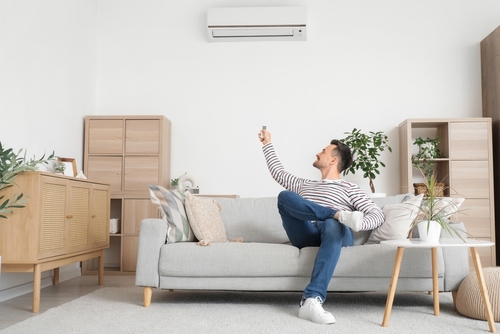 these days. That’s because they’re a great option for more efficient heating and cooling. That’s right: they provide both heating and cooling for your home. While the all-in-one aspect is great, the main benefits of a heat pump are their energy efficiency and versatility. And, they can help your reduce your home’s carbon footprint, too.
How Do Heat Pumps Work?
Heat pumps work by moving existing heat in the air from one place to another using an outdoor compressor and an indoor air handler. In the summer, hot air from inside your home is removed — creating a cooler indoor environment. While it sounds counterintuitive, in the winter, the pump extracts heat from the outdoor air (or the ground, depending on the type of heat pump system you have) and distributes it to your home.
The biggest difference is how heat pumps work with your thermostat. To maximize efficiency when you’re running a heat pump, it’s best to maintain a consistent temperature. Turning down the heat pump when you are not at home or asleep will result in increased energy use to return to your desired temperature.
Excellent Efficiency
Because this technology uses electricity to move heat rather than generate it, it’s much more energy efficient than other electric heating and cooling systems—and, installed and used correctly, it can help lower your energy bills across the board.
That said, a Long Island winter can be damp and raw, and a lot of our older housing stock isn’t as well insulated as a newer home. For some houses, a heat pump might not be the best choice as a sole source of heat. But because a heat pump system can be installed without ductwork, it make a savvy option to help you use energy more efficiently while staying more comfortable all year.
Using a heat pump in fall and spring, and when winter temperatures are milder, means you can rely less on your oil or gas furnace, helping keep those costs down. That’s because when the weather is milder and temperatures fluctuate a lot, your furnace cycles on and off more frequently, which can lead to higher energy bills. Similarly, when outdoor temperatures fall below 25⁰ or 30⁰ F, a heat pump will still provide heat, but it will need to work harder to find warm air, and it will use more electricity.
You can also use heat pumps to strategically heat and cool specific rooms, which can also contribute to lowered fuel and energy costs.
Cooling Power
In summer, a heat pump works the opposite way, pulling warm air out of your home. While the recommended efficient setting for cooling with a heat pump is around 75°F to 78°F when you’re home, you should know that heat pumps do an excellent job of dehumidifying. Humidity—especially in our coastal climate—plays a huge role in how hot and sticky you feel. Reducing humidity means that higher thermostat setting will feel just as comfortable as a lower one with a traditional AC. Adding ceiling fans can also boost comfort at higher thermostat settings, letting you save energy without noticing the difference.
Reduced Carbon Footprint
For starters, a heat pump’s efficiency makes it more environmentally friendly. But because they are electric, they produce fewer carbon emissions. And, as more and more of the electricity generated in our area comes from renewable sources—or at least cleaner-burning fuels like natural gas, rather than coal—they are better for the air we breathe and for the climate.
More Versatility
Because heat pumps and mini-split systems don’t require ductwork they are adaptable for a variety of uses. Apartments and condominium units, outbuildings like guesthouses, poolhouses, and barns, as well as additions and spaces not well-served by a primary heating system are all great candidates for a heat pump or mini-split system. Maintenance and repair is also less intensive for these systems as there is no combustion involved.
Ready to Learn More?
The expert team at Scarpelli can answer all your questions and help you find the best size and type of heat pump for your home. We have extensive training and experience in installing, servicing and repairing state-of-the-art heat pumps from top brands, like Bosch and Rheem.
If you’re interested in exploring your heat pump options, contact us today!